Post-Pandemic Eye Care Calls for a Better Approach
Why Does the Eye Area Age First?
Compared with the rest of the face, the eye area shows signs of aging earlier. Differences in tissue structure, function, nerve and blood vessel distribution, and sensitivity to external stimuli all contribute.
The Skin Around the Eyes Is Especially Delicate
1. The thinnest epidermis on the body
The human epidermis averages about 0.1 mm in thickness. On the face, it is less than half as thick, at roughly 0.04 mm. Around the eyes, especially on the eyelids, it is even thinner—just 0.01–0.02 mm.
Eye-area skin has the same basic structure as skin elsewhere on the body, but it is several times thinner. If the rest of the face is a layered pastry, the eye-area epidermis is a single crepe.

2. A flatter dermal–epidermal junction
The dermal–epidermal junction (DEJ) connects the outer epidermis to the deeper dermis. Its wave-like ridges increase the contact area between the layers, providing mechanical support and supporting nutrient exchange.

The DEJ around the eyes is much flatter than elsewhere on the face and body. This weakens the connection between the layers, making the skin more susceptible to separation, sagging, and wrinkles from repeated muscle movement.
3. Limited dermal scaffolding
The dermis acts as the skin’s support framework, made primarily of collagen and elastin. The eye area naturally has less of both.
Collagen density is lower, and the elastin network is sparser. Collagen fibers are also arranged less regularly and withstand repeated stretching less effectively.
4. No subcutaneous fat cushion
Although body fat often gets a bad reputation, subcutaneous fat cushions the skin and gives it shape. Where this support is lacking, hollows and folds can become more noticeable, including around the nasolabial folds.

At birth, the eye area has no subcutaneous fat cushion. Instead, the skin sits directly over the orbicularis oculi, the muscle surrounding the eye. This has two main effects:
• Expression lines form more easily. Without cushioning, repeated blinking and eye movement cause the skin to fold again and again. This helps explain why crow’s feet appear early.
• Hollows can create shadows that resemble dark circles. As fat around the eye socket diminishes, the area becomes more hollow and casts shadows. These are often called structural dark circles.
The eye area also has far fewer oil and sweat glands than the T-zone. Sebum, the skin’s natural oil, helps lubricate its surface and reduce moisture loss. Fewer glands make this area more prone to dryness.
Nerves and Blood Vessels Also Play a Role
1. Higher nerve-ending density
The eye area’s distinctive network of nerves and small blood vessels contributes to its tendency toward dark circles, puffiness, and redness.
The eyelids have an especially high density of nerve endings. Combined with a thin, delicate barrier, this makes the area highly reactive. Physical triggers, such as friction and temperature changes, and chemical triggers, such as fragrances, preservatives, and concentrated active ingredients, can cause stinging, burning, and itching.
Eye-area formulas therefore need to prioritize gentleness and minimize irritation.
2. Denser capillary network
The eye area has a dense network of small blood vessels. Its thin, translucent skin allows their color to show through, creating blue-purple vascular dark circles. Fatigue and insufficient sleep can make them more noticeable.
A common cause of eye-area puffiness is fluid leaking from small blood vessels into surrounding tissue. Allergies, salty meals, and insufficient sleep can contribute to fluid accumulation and swelling.
How Expression Lines Become Lasting Wrinkles
The eye area is especially prone to early wrinkles. To understand how they develop, it helps to distinguish between dynamic and static lines.
Dynamic lines, also called expression lines, appear when facial muscles contract and fade or disappear when the face relaxes. Examples include crow’s feet when smiling, forehead lines when raising the eyebrows, and lines between the eyebrows when frowning.
Static lines remain visible when the face is at rest. They develop through repeated folding, age-related collagen and elastin loss, UV damage, and gravity.

Dynamic lines can become static over time. As the skin loses structural support and elasticity, lines that once appeared only during facial expressions can remain visible at rest.
Eye-area wrinkles can become persistent more quickly for several reasons:
1. Frequent muscle movement. People blink more than 15,000 times a day, in addition to smiling and laughing, repeatedly engaging the muscle around the eyes.
2. Delicate skin structure. A thin epidermis, sparse collagen, and a flatter DEJ leave the area less resistant to repeated stretching.
3. Direct movement of the skin. Contractions of the muscle around the eye pull and fold the overlying skin, contributing to crow’s feet.
4. UV exposure and dryness. UV damage accelerates the breakdown of collagen and elastin, while lower oil production leaves the skin more vulnerable to dryness.
Fine expression lines may begin appearing around the eyes in the early twenties, often before people notice them. Over time, these lines can become longer, deeper, and visible at rest.
Dynamic and static lines often coexist. Because expression lines can develop into lasting wrinkles, addressing them early is a key focus of eye-area care.
Clinical interventions for the eye area
One approach to eye-area wrinkles focuses on reducing the excessive muscle contractions that contribute to expression lines.
Injectable botulinum toxin is a well-established treatment for dynamic lines. Muscle contraction depends on nerve signals released through a process involving the SNARE protein complex.
Botulinum toxin type A acts on SNAP-25, a protein involved in the release of nerve signals. This temporarily interrupts communication between nerves and muscles, allowing targeted expression muscles to relax and smoothing dynamic wrinkles.
Topical peptides such as acetyl hexapeptide-8, better known as Argireline, are also used to address expression lines. Often described as a “Botox-like peptide,” Argireline is designed to interfere with the signaling involved in muscle contraction. It is particularly associated with care for early expression lines.

In short, Argireline masquerades as SNAP-25, so the cell can only assemble non-functional SNARE complexes and muscle contraction never starts.
Beyond wrinkles, the eye area can also experience dryness, inflammation, milia, sensitivity, stinging, and puffiness. These concerns call for targeted ingredients.
The new eye-serum formulation system
UNILIPO’s multi-peptide eye serum has evolved through four generations since its launch in 2019. I still remember the excitement before the first launch, the joy of receiving results from third-party clinical and real-world studies, and the publication of our first SCI-indexed paper. The eye serum made those milestones possible.
After the pandemic, we heard from users whose eye areas had become more reactive. Even products marketed as gentle or barrier-supporting sometimes left their skin red, swollen, or uncomfortable, making them cautious about trying more intensive formulas.
In response, we updated the multi-peptide formula with a clear goal: retain its rapid, visible wrinkle-smoothing performance while improving comfort for long-term use.
Comprehensive Wrinkle Care
Targeting Expression Line
10% Argireline
We continue to use acetyl hexapeptide-8 from Lipotec, the original manufacturer of Argireline.
Many new peptides have emerged over the past two years, but Argireline remains a key ingredient in our approach to eye-area expression lines.
The mechanism is described above, and clinical research has also examined its wrinkle-smoothing effects. Alongside international research, a study involving Chinese participants found that topical acetyl hexapeptide-8 improved the appearance of crow’s feet [1].

Smoothing Lasting Lines
5% Matrixyl® 3000
Another familiar ingredient is Matrixyl® 3000, a complex of palmitoyl tripeptide-1 and palmitoyl tetrapeptide-7 sourced from Sederma. While Argireline targets expression lines, Matrixyl® 3000 supports collagen production to smooth wrinkles over time.
These signaling peptides communicate with dermal fibroblasts, encouraging the production of collagen, fibronectin, and hyaluronic acid. These components support the skin’s underlying structure, contributing to firmer skin and less visible wrinkles.
In short, Matrixyl® 3000 fills out the dermis and gradually pushes wrinkles back up — the static-line strategy we described above.

Targeting Glycation
0.15% supramolecular carnosine
Tests for advanced glycation end products (AGEs) show that glycation is widespread in aging skin. This process contributes to changes in skin structure, appearance, and function—sometimes informally called “sugar sag.”

Carnosine is used in skincare to help counter glycation. In the supramolecular delivery system described here, its anti-glycation activity is reported to be 20–30 times greater than that of conventional carnosine, helping reduce protein damage associated with wrinkles and sagging.
Fast-Acting Soothing Care
Even gentle peptide formulas can occasionally cause discomfort, so we added ingredients to help soothe the skin.
1. 1% Prolistin
Prolistin, sourced from Exsymol, combines proline amide ethyl imidazole, butylene glycol, and water. Produced through amino acid biofermentation, it is designed to reduce discomfort, including stinging and swelling, and help calm inflammation.
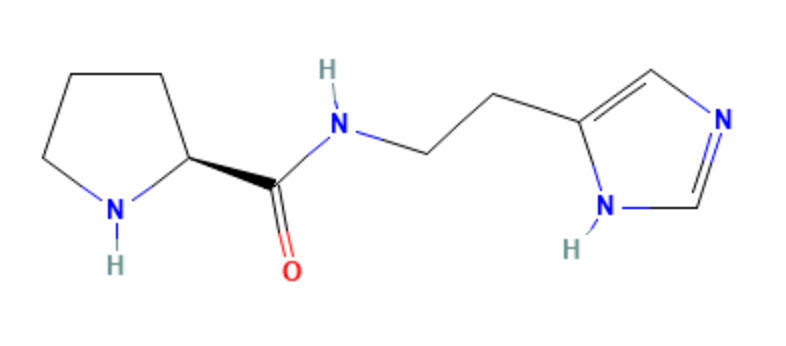
Proline amide ethyl imidazole and related compounds are described as having antihistamine-like effects that help relieve itching and redness. The cited research examines effects on oxidative stress and immune signaling involved in atopic dermatitis [2].
2. 4-t-Butylcyclohexanol
An ingredient used in sensitive-skin care, 4-t-butylcyclohexanol targets TRPV1, a receptor involved in sensations such as stinging and burning. Clinical studies report reduced discomfort and improvements in transepidermal water loss (TEWL), a measure of moisture loss through the skin [3].


3. Kava (Piper methysticum) extract
Kava extract contains kavain, a compound described as having local anesthetic and anti-inflammatory effects. It acts on voltage-gated sodium channels involved in nerve signaling.
In topical formulas, it is used to help reduce sensations such as stinging, burning, and itching.
4. Bisabolol + Allantoin
Bisabolol and allantoin are established soothing ingredients. Together, they help calm redness and irritation in the delicate eye area.
Soothing and Repair Support
1. 3% UNISOUL® Renew
UNISOUL® Renew is UNILIPO’s patented milk thistle extract in a lipid-encapsulated form. Its key active, silymarin, is known for its antioxidant activity and is studied for its role in soothing skin and addressing photoaging.
Clinical research has examined silymarin’s effects on inflammatory markers, including IL-1 and IL-6, and on inflammatory skin conditions such as atopic dermatitis [4]. Its performance depends on the extract’s composition and delivery through the skin.
Our supercritical extraction and supramolecular co-solvent processes are designed to concentrate and stabilize the active compounds and support their delivery.

2. 0.5% Panthenol
Also known as provitamin B5, panthenol is a moisture-binding ingredient widely used in products for damaged skin. It supports skin renewal and barrier recovery and helps reduce post-inflammatory redness [5].

3. Palmitoyl Tetrapeptide-7
Palmitoyl tetrapeptide-7 is one of the two peptides in Matrixyl® 3000, but it also deserves a separate mention.
In addition to supporting collagen production, it is described as helping reduce inflammation by limiting the production of interleukin-6 (IL-6). Research has examined its effects on inflammatory markers in irritated skin [6].


4. Magnolia biondii (Magnolia bud) extract
Magnolia biondii extract helps limit UVB-induced DNA damage associated with photoaging. Its active compound, magnolin, is described as reducing the release of inflammatory substances, helping calm skin reactivity.
Other supporting ingredients
De-puffing
Acetyl tetrapeptide-5 & Caffeine
Acetyl tetrapeptide-5 and caffeine help reduce the appearance of puffiness and improve skin smoothness and elasticity.
Many users tell us the multi-peptide serum helps their eye area look less puffy after late nights or long trips. These two ingredients contribute to that effect.
Boosting the skin's own hydration
Glyceryl Glucoside & Trehalose
Glyceryl glucoside supports aquaporin-3 (AQP3), a protein involved in transporting water and glycerol through the skin. We use it throughout our product line, and it is especially useful in the eye area, where maintaining hydration can be challenging.

Trehalose helps bind moisture and form a protective film, reducing dryness and flaking around the eyes. It also helps stabilize cell membranes under heat and UV stress, supporting the skin barrier.
Closing notes
This eye serum is not the most intensive formula in the UNILIPO range. Our vitamin C, vitamin A, brightening, and collagen-plumping serums take that role—products some of you have called your “age-defying essentials.”
The multi-peptide eye serum was developed with reactive skin in mind, and I believe it is one of our easiest anti-aging products to use consistently. Its gentle approach is designed to make daily eye care a lasting habit.
It is tempting to reach for the low-hanging fruit. We choose to climb higher for the harder-to-reach fruit, where the sunlight is strongest and the reward is sweetest.
Even in difficult times, we keep climbing. Our fourth-generation multi-peptide eye serum reflects that commitment.
Because moving forward means keeping our eyes on what comes next.
References
[1] Wang Y, Wang M, Xiao S, et al. The Anti-Wrinkle Efficacy of Argireline, a Synthetic Hexapeptide, in Chinese Subjects. 2013.
[2] Kim HE, Lee JY, Yoo D-H, Park H-H, Choi E-J, Nam K-H, Park J, Choi JK. Imidazole propionate ameliorates atopic dermatitis-like skin lesions by inhibiting mitochondrial ROS and mTORC2. Frontiers in Immunology. 2024;15:1324026. doi:10.3389/fimmu.2024.1324026
[3] Srour J, Bengel J, Linden T, Jovanovic Z, Roggenkamp D, Reinholz M, Rothenberger C, Neufang G, Wollenberg A. Efficacy of a skin care cream with TRPV1 inhibitor 4-t-butylcyclohexanol in the topical therapy of perioral dermatitis. Journal of Cosmetic Dermatology. 2020;19(6):1409–1414. doi:10.1111/jocd.13175
[4] Iraji F, Sharif Makhmalzadeh B, Abedini M, Aghaei A, Siahpoush A. Effect of herbal cream containing Fumaria officinalis and silymarin for treatment of eczema: A randomized double-blind controlled clinical trial. Avicenna Journal of Phytomedicine. 2022;12(2):155–162. doi:10.22038/AJP.2022.19492
[5] Gao M, Gao N, Wang L, Yao T, Jing H, Liu H, Gao L. Evaluation of the Efficacy and Safety of a Panthenol-Enriched Mask for Skin Barrier Recovery After Facial Laser Treatment: Results of a Double-Blind Randomized Controlled Study. Journal of Cosmetic Dermatology. 2025;24(7):e70223. doi:10.1111/jocd.70223
[6] Kim M, Kim M, Kim J, Kim J. Control Effect of Palmitoyl Tetrapeptide-7 Gel to Inflammatory Responses Elicited by PM10. Asian Journal of Beauty and Cosmetology. 2021.


Comments