The Key to Controlling Uric Acid Isn't in the Kidneys – It's Here?
A "disease of affluence" with a long history
Today, high uric acid levels and gout have become widespread public health concerns.
The prevalence of hyperuricemia in China exceeds 14%. Among adults aged 20–80, that rate rises to 25%.
China is actually considered a relatively low-prevalence country by comparison. In the United States, about 21% of adults have been diagnosed with hyperuricemia. Several countries have even higher rates – India at 44.6%, Finland at 48%, and French Polynesia topping the list at 71.6%.

High uric acid is not only widespread — it also has a long history. It is the precursor to most cases of gout, a condition described over 2,400 years ago by Hippocrates as "gout of the foot."
It became known as a "disease of affluence" because it was historically associated with royalty and the wealthy — hence its nickname, the "disease of kings."
In the late 18th century, Swedish chemist Carl Wilhelm Scheele identified uric acid as a chemical compound — helping uncover the biological basis of gout.

But even after uric acid was identified, effective treatments for gout remained limited. It wasn't until the 1960s that allopurinol — one of the best-known xanthine oxidase inhibitors — entered clinical use for gout.
In the decades that followed, drugs targeting various uric acid pathways emerged rapidly – febuxostat, benzbromarone, dotinurad, and others – all used to manage hyperuricemia and gout.
While each has its own strengths, these medications can also cause side effects — including rash, allergic reactions, gastrointestinal discomfort, and, depending on the drug, liver, kidney, or cardiovascular complications.
Leaving persistently elevated uric acid unmanaged also carries risks. Persistently high uric acid levels don't just lead to gout – they also raise the risk of hypertension, chronic kidney disease, and cognitive decline.
So is there a way to effectively lower uric acid, relieve gout symptoms, reduce recurrence, and do so safely?
In recent years, research has increasingly identified the gut microbiota as a potential target for managing hyperuricemia.

From uric acid metabolism and transport to excretion, the gut and its microbiota are an important part of the picture.
The Three Key Areas That Affect Uric Acid Levels
Three major organs involved in uric acid metabolism are the liver, kidneys, and gut – all indispensable. Dysfunction in any of these systems can disrupt uric acid production, metabolism, or excretion.
01 Liver
The first site is the liver, a major site of purine metabolism. Liver dysfunction can therefore influence purine metabolism and uric acid levels.
02 Kidneys
Uric acid in the blood is filtered through the glomeruli, after which much of it is reabsorbed and secreted through transport processes in the proximal tubules before a portion is ultimately excreted in urine.
Through this unique balance of reabsorption and excretion, the kidneys maintain stable serum uric acid levels. But if kidney function or transporter proteins are impaired, excessive reabsorption or reduced excretion can lead to hyperuricemia.
03 The Gut
The gut not only affects uric acid synthesis and metabolism – it also influences the function of the other two sites. First, alongside the kidneys, the gut contributes substantially to uric acid elimination, accounting for roughly one-third of uric acid excretion.
The more uric acid the gut can eliminate, the less strain on the kidneys – and the lower the risk of hyperuricemia.
Second, a growing body of research suggests that gut microbiota may influence pathways involving XO, ABCG2, and GLUT9, which participate in uric acid production, transport, and excretion.

The Relationship Between Hyperuricemia and the Gut Microbiome
The gut microbiota of people with high uric acid differs significantly from that of healthy individuals. Fecal sample analysis reveals that bacteria such as Enterococcus faecalis and Bacteroides faecalis are markedly more abundant, while beneficial bacteria such as Bifidobacterium, Lactobacillus, and Faecalibacterium prausnitzii are significantly reduced.
For example, increased levels of Bacteroides faecalis — a reported biomarker for inflammatory bowel disease (IBD) — have also been associated with worsening gout and intestinal inflammation.

Faecalibacterium prausnitzii is a beneficial gut bacterium that produces butyrate, which helps maintain a healthy intestinal barrier. Its reduced abundance in people with hyperuricemia may contribute to a weaker gut barrier and increased inflammation.
Another study analyzing fecal microbiota from patients with hyperuricemia and gout reached a similar conclusion: these patients not only had significantly lower gut microbial diversity, but also higher levels of various pathogenic and opportunistic bacteria than healthy individuals – indicating a fragile microbial ecosystem.
However, these findings demonstrate an association between hyperuricemia and the gut microbiota — they don't prove that a "worsening" of the gut microbiota directly causes elevated uric acid. The following animal studies, however, provide stronger evidence for a potential causal relationship.
When fecal microbiota from hyperuricemic animals and healthy animals were transplanted into antibiotic‑treated, germ‑free rats, the group receiving hyperuricemic microbiota showed a clear rise in uric acid by the third week (along with significantly increased LDL cholesterol), while the control group showed no notable changes.
Genetically defective mice are another common tool for studying causation. In Uox‑knockout mice, gut dysbiosis and impaired intestinal barrier integrity disrupt amino acid transport and reduce serum amino acid levels – which in turn affects the purine nucleotide cycle and CD4⁺ Th17 cell differentiation, ultimately promoting hyperuricemia and gout. Notably, uric acid levels returned to normal after supplementation with microbiota from healthy mice.

Together, these animal studies suggest that gut dysbiosis may contribute to disturbances in purine metabolism and inflammation. Restoring a healthier microbial balance may, in turn, improve uric acid regulation.
How Gut Microbiota Helps Manage High Uric Acid
Now that we understand the role of the gut microbiota in uric acid metabolism, using it to help regulate uric acid levels is a natural next step. The microbiota may influence uric acid levels through four key mechanisms:
1. Break down purines – reducing the amount available for uric acid production.
2. Inhibit key enzymes – reducing uric acid production.
3. Promote uric acid transport and excretion – reducing its accumulation in the blood.
4. Support liver and kidney function – reducing strain on these organs.
I. Microbiota Breakdown and Utilization of Purines
Whether from food or the body's own metabolism, purines are the raw materials for uric acid synthesis. Once absorbed, they can eventually be converted into uric acid. But what if gut bacteria could "eat" these purines before they're absorbed?
That's the breakthrough.
Many gut bacteria – especially Lactobacillus – can metabolize or absorb purines and their derivatives. And there's direct evidence: radioisotope-labeled purine feeding experiments in rats showed significantly lower blood radioactivity levels in those treated with Lactobacillus gasseri.
By breaking down purines in the gut before they're absorbed, these bacteria can reduce the amount available to enter the bloodstream and eventually become uric acid. Over time, this may help lower blood uric acid levels.
Different strains vary in efficiency. For example, strains TSR332 (L. reuteri) and TSF331 (L. fermentum) – isolated from healthy human guts – can degrade nucleosides within just 30 minutes, with rates of up to 90.05% and 78.02%, respectively. That means fewer uric acid precursors are available for intestinal absorption.


2. Reducing Uric Acid Synthesis
Simply cutting back on dietary purines isn't always enough — your body is constantly producing purines of its own. Cut down what's coming in, and there's still more being produced from within.
That's where the gut microbiota can step in again — by targeting a key pathway that converts purines into uric acid. And one of the best places to set up an ambush? Xanthine oxidase (XO).

As shown in the diagram, XO controls the final steps of purine breakdown that lead to uric acid. In other words, it's a key checkpoint on the road to uric acid production. That's exactly why several urate-lowering drugs — including allopurinol, febuxostat, and topiroxostat — target XO.
And the results are striking: in preclinical experiments, certain Lactobacillus paracasei strains reduced XO activity by up to 80%.
In one study, hyperuricemic mice given oral L. paracasei MJM60396 for three weeks saw their serum uric acid levels return to normal, alongside reduced XO activity and uric acid synthesis. Another animal study found that hyperuricemic mice fed Lactobacillus plantarum X7022 for four weeks showed a 35.5% decrease in serum uric acid.
And it's not just Lactobacillus. In animal studies, Akkermansia muciniphila — well known for supporting gut barrier health — has also been shown to reduce XO expression in the liver, helping to lower serum uric acid levels.
3. Promoting Uric Acid Transport and Excretion
For many people with hyperuricemia, the biggest challenge isn't producing too much uric acid — it's not getting rid of enough. That's why blood uric acid can remain high even when purine-rich foods are carefully controlled. It's like a reservoir with both an inlet and an outlet: even if you reduce the inflow, the water level will keep rising if the outlet is nearly blocked.
That's why efficient uric acid transport and excretion matter so much — and once again, the gut microbiota may have an important role to play.
ABCG2 is a membrane transporter responsible for moving uric acid from intestinal cells into the gut lumen – effectively the "gatekeeper" of intestinal uric acid excretion. So what happens when you boost this "gatekeeper"? Studies suggest that increasing ABCG2 expression can enhance uric acid excretion through the gut.
And here's where Lactobacillus comes in again.
A 2022 study found that Lactobacillus Fmb14, isolated from yogurt, increased ABCG2 expression in the colon and promoted intestinal uric acid excretion. At the same time, it reduced URAT1 expression in the kidneys, helping limit uric acid reabsorption.
A multi‑strain combination works even better. A blend of L. fermentum TSF331, L. reuteri TSR332, and L. plantarum TSP05 increased uric acid transport by 35–40% within 24 hours. Further research shows this combination not only significantly upregulates ABCG2 expression, but also inhibits SLC2A9 – a transporter involved in uric acid reabsorption – further reducing uric acid recycling.

4. Restoring Barrier Integrity and Reducing Organ Damage
If the first three steps are about lowering blood uric acid, this one is about limiting the damage high uric acid can do.
High uric acid can impair the intestinal barrier and lower butyrate levels. But the damage may not be irreversible: in preclinical studies, supplementation with Bifidobacterium or butyrate helped restore the intestinal barrier and reduce serum uric acid.
The potential benefits may extend beyond the gut. In animal studies, a Lactobacillus blend lowered transaminases (e.g., AST) and significantly reduced pro‑inflammatory cytokines TNF‑α and IL‑6. It also increased glutathione levels and glutathione peroxidase activity — both important parts of the body's antioxidant defenses.
Human data support this. In 2024, researchers from Fooyin University published a randomized, double-blind, controlled trial involving 82 adults with abnormal liver function and elevated uric acid. The 2‑month intervention tested three single Lactobacillus strains and a multi‑strain/postbiotic combination, while tracking liver enzymes.

The results? All treatment groups showed significant reductions in uric acid, with the multi-strain/postbiotic combination showing the strongest effect. Interestingly, men saw a 19.9% reduction - significantly greater than that seen in women, although both groups improved.

Liver enzyme markers also improved: AST fell by 31.43% and ALT by 40%.
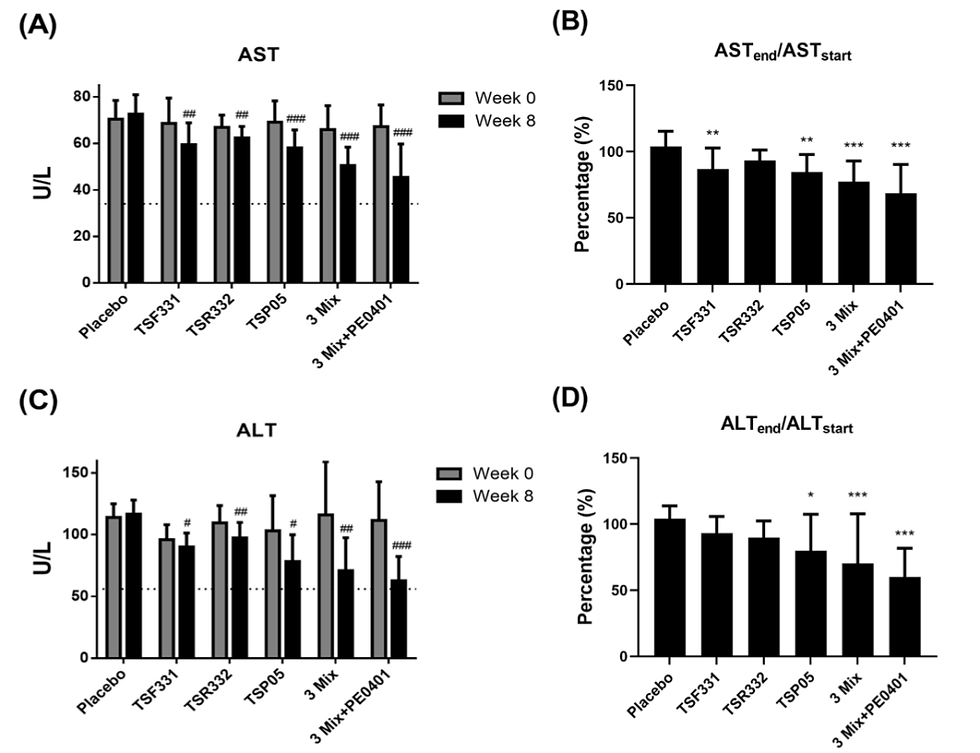
Fecal microbiome analysis revealed an increase in commensal lactic‑acid‑producing bacteria, while pathogenic species declined – notably Bilophila wadsworthia (a pro‑inflammatory, hydrogen sulfide‑producing bacterium), which dropped sharply.
Summary
Put it all together, and probiotics may influence uric acid from multiple angles — breaking down its precursors, reducing its production, promoting its excretion, and supporting the organs involved along the way.
The diagram below illustrates the multiple mechanisms: green indicates promotion of uric
acid metabolism and excretion, while red indicates inhibition of synthesis and reabsorption.

Because the gut not only has strong uric acid excretion capacity but also plays a central role in metabolizing most drugs via the gut‑liver axis, microbiota‑based intervention offers distinct advantages over current medications. It can both treat and prevent – and more importantly, avoids the liver and kidney damage often associated with drugs.
In the coming decade, targeting the gut as a promising core pathway for urate‑lowering therapy will be the most promising approach.


Comments